



Newsletter 270

Conflict in the Middle East: impacts on supplies to the cosmetics industry
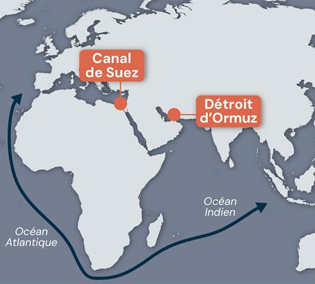
The conflict involving the United States, Israel and Iran, centred around the Gulf, is causing significant volatility for the cosmetics industry. Packaging, ingredients, logistics – every link in the chain is affected.
- Packaging : plastiques et aluminium en première ligne
The packaging sector is the most exposed in the short term. Dependent on petroleum derivatives and metal production from the Gulf, manufacturers are seeing their costs skyrocket. The surge in oil prices has a direct impact on naphtha, the raw material used to make plastics. At the same time, logistical disruptions are slowing imports from the Middle East to Europe. The result: more expensive bottles, jars and flexible packaging, and an increased risk of shortages.
With regard to aluminium: The Gulf accounts for nearly 9% of global production. With prices reaching $3,200/tonne in early March and premiums on the rise, supplies are tightening. Aerosols, tubes and premium packaging are therefore likely to see their costs rise sharply.
- Ingrédients : l’effet du pétrole sur les formulations
The industry is experiencing a double impact: petrochemical derivatives and plant-based raw materials are becoming more expensive.
- Ingrédients synthétiques : Les solvants et conservateurs issus de la pétrochimie suivent mécaniquement la hausse du pétrole.
- Huiles végétales et oléochimie : La montée des prix du pétrole favorise les biocarburants, réduisant la disponibilité d’huiles comme le palme ou le colza pour la cosmétique. Les tensioactifs utilisés dans les shampoings et gels douche, ainsi que les dérivés d’huiles tropicales (coco, palmiste), sont également affectés, avec des prix en forte hausse.
- Logistique et production : une facture énergétique qui grimpe : les chaînes d’approvisionnement sont contraintes : le contournement du détroit d’Ormuz et la hausse des assurances maritimes rallongent les délais et renchérissent le coût des importations d’ingrédients exotiques ou d’emballages d’Asie et du Moyen-Orient. Par ailleurs, la flambée du gaz et de l’électricité en Europe, aggravée par l’arrêt des livraisons de LNG qatari, augmente le coût des opérations industrielles énergivores (mélange, conditionnement).
Les entreprises peuvent consulter l’analyse de l’impact du conflit au Moyen-Orient sur les matières premières réalisée par SVP, partenaire de Cosmed.
Working directly with the Ministry of Economy, Cosmed is implementing regular monitoring of the impact of these events on the sector and will keep its members informed on an ongoing basis to help them anticipate and respond to market developments.
Exports to the Middle East: administrative closures in Saudi Arabia and Israel
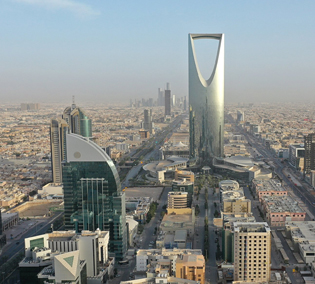
In this geopolitical context, several countries in the region have strengthened their cybersecurity measures. As a preventive measure, the FASEH administrative and certification platform (Saudi Arabia) has been temporarily closed. In Israel, the administrative offices of the Ministry of Health have also suspended their usual activities (product registration) and are currently only issuing emergency documents (deaths, vaccinations, etc.).
The documents required for the export of cosmetic products cannot therefore be obtained until further notice, and there is no visibility at this time. This situation is causing delays, in addition to the logistical difficulties currently being experienced in the region.
More information: regulatory1@cosmed.fr
United States: illegal customs duties – will companies be reimbursed?
Following the ruling handed down on 20 February by the US Supreme Court, declaring part of the so-called ‘reciprocal’ customs duties illegal and potentially paving the way for refunds for the companies concerned, no official refund procedure has yet been announced at this stage. Companies are therefore advised to carefully retain their proof of payment and to follow the decisions of the U.S. Court of International Trade, which is responsible for specifying the terms and conditions of any refunds.
Several companies have already taken legal action to recover the amounts paid, including L’Oréal, FedEx and Revlon. Some importers have also taken legal action to request the rapid implementation of a simplified refund mechanism.
However, the timetable remains uncertain: implementing such a system could take several months or even several years.
More information: regulatory1@cosmed.fr
REP wastewater: Cosmetics Europe’s appeal rejected by the Court, debate on the merits still open
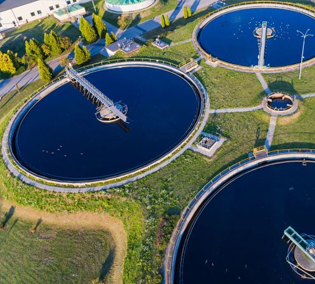
The appeal lodged by Cosmetics Europe challenging the introduction of EPR on wastewater was rejected by the European Court of Justice. The Court justified its decision by emphasising that a federation cannot challenge a directive on its own behalf. However, it did not rule on the merits of the case, i.e. on the validity or relevance of the arguments put forward by the cosmetics sector.
Cosmetics Europe is challenging the EPR mechanism provided for in the revision of the Urban Waste Water Treatment Directive (UWWTD), demonstrating that the contribution of the cosmetics industry has been greatly overestimated by attributing to it substances that are banned, unused or ubiquitous. The entire cosmetics sector, including Cosmed, is calling for a proportionate EPR and requesting the introduction of a ‘Stop the Clock’ clause to suspend implementation of the directive while robust scientific studies are conducted and the real impact on all the sectors concerned is assessed, with a view to revising the text on that basis.
However, one appeal remains, that of Poland, which also challenges the REP and is still under review.
To be continued…
How to protect your brand in ASEAN?
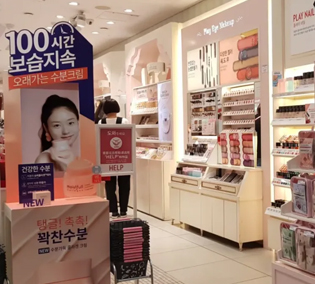
Southeast Asia is a rapidly expanding market for cosmetics, with annual growth expected to reach 3.55% until 2029. To support European SMEs wishing to export to this region, the South-East Asia IP SME Helpdesk, a service provided by the European Commission, offers a practical guide to securing trademarks, patents, copyrights, designs and licences in ASEAN. This service provides free, confidential advice tailored to SMEs, enabling them to export to the region with confidence.
More information: regulatory2@cosmed.fr
Adoption de la loi de finances 2026 : un cap favorable aux PME
After four months of debate, the 2026 Finance Act has been adopted. The CPME, of which Cosmed is a member, has been actively campaigning for a stable, transparent tax system that is conducive to SME investment. Key measures include:
- Maintenance of the research tax credit (CIR);
- Extension of tax exemptions for Young Innovative Companies (JEI);
- Extension of the green industry tax credit until 2028;
- No increase in excise duties on gas;
- Maintenance of the Dutreil pact, facilitating the transfer of family businesses.
The CPME remains vigilant and offers a summary to help businesses understand the issues at stake.